![tempImagec8AP4l.gif]() Image 1 of 1
Image 1 of 1
Virgin of Guadalupe Statue - Bronze Finish
The story of Our Lady of Guadalupe, one of the most revered Marian apparitions, unfolds in 1531 on the Hill of Tepeyac near Mexico City. The background begins with an indigenous man named Juan Diego, who on December 9, while en route to Mass, witnessed an apparition of the Virgin Mary. She spoke to him in his native Nahuatl language, identifying herself as the "perfect and perpetual Virgin Mary, Mother of the True God" and instructed Juan Diego to convey her wish for a church to be built on the site to the local bishop, Juan de Zumárraga. Juan Diego relayed the Virgin's request to Bishop Zumárraga, who was skeptical and requested a sign proving the vision's divine nature. On December 12, following the Virgin's instructions, Juan Diego found Castilian roses, not native to the region and out of season, on the barren hilltop of Tepeyac. He gathered the flowers in his tilma (a type of cloak). When he presented them to the bishop, the flowers fell to the ground, revealing an image of the Virgin imprinted on the fabric, a miraculous occurrence since the coarse cactus cloth of the tilma should not have been able to hold such a detailed image, much less survive intact for over 500 years. This miraculous image led to the conversion of millions of indigenous people to Catholicism, fostering a synthesis of indigenous cultures and Christianity in Mexico. The Basilica of Our Lady of Guadalupe, located at the site of the apparition, is one of the most visited Catholic pilgrimage sites in the world today. Our Lady of Guadalupe has become a potent symbol of Mexican identity and faith, representing compassion, protection, and a blend of indigenous and Spanish influences, embodying the rich cultural heritage of Mexico. Her feast day is celebrated on December 12.
Statue measures L 4 ⅝ W 2 ⅞ H 9 ½
Made from cold cast resin
Get notified by email when this product is in stock.
The story of Our Lady of Guadalupe, one of the most revered Marian apparitions, unfolds in 1531 on the Hill of Tepeyac near Mexico City. The background begins with an indigenous man named Juan Diego, who on December 9, while en route to Mass, witnessed an apparition of the Virgin Mary. She spoke to him in his native Nahuatl language, identifying herself as the "perfect and perpetual Virgin Mary, Mother of the True God" and instructed Juan Diego to convey her wish for a church to be built on the site to the local bishop, Juan de Zumárraga. Juan Diego relayed the Virgin's request to Bishop Zumárraga, who was skeptical and requested a sign proving the vision's divine nature. On December 12, following the Virgin's instructions, Juan Diego found Castilian roses, not native to the region and out of season, on the barren hilltop of Tepeyac. He gathered the flowers in his tilma (a type of cloak). When he presented them to the bishop, the flowers fell to the ground, revealing an image of the Virgin imprinted on the fabric, a miraculous occurrence since the coarse cactus cloth of the tilma should not have been able to hold such a detailed image, much less survive intact for over 500 years. This miraculous image led to the conversion of millions of indigenous people to Catholicism, fostering a synthesis of indigenous cultures and Christianity in Mexico. The Basilica of Our Lady of Guadalupe, located at the site of the apparition, is one of the most visited Catholic pilgrimage sites in the world today. Our Lady of Guadalupe has become a potent symbol of Mexican identity and faith, representing compassion, protection, and a blend of indigenous and Spanish influences, embodying the rich cultural heritage of Mexico. Her feast day is celebrated on December 12.
Statue measures L 4 ⅝ W 2 ⅞ H 9 ½
Made from cold cast resin
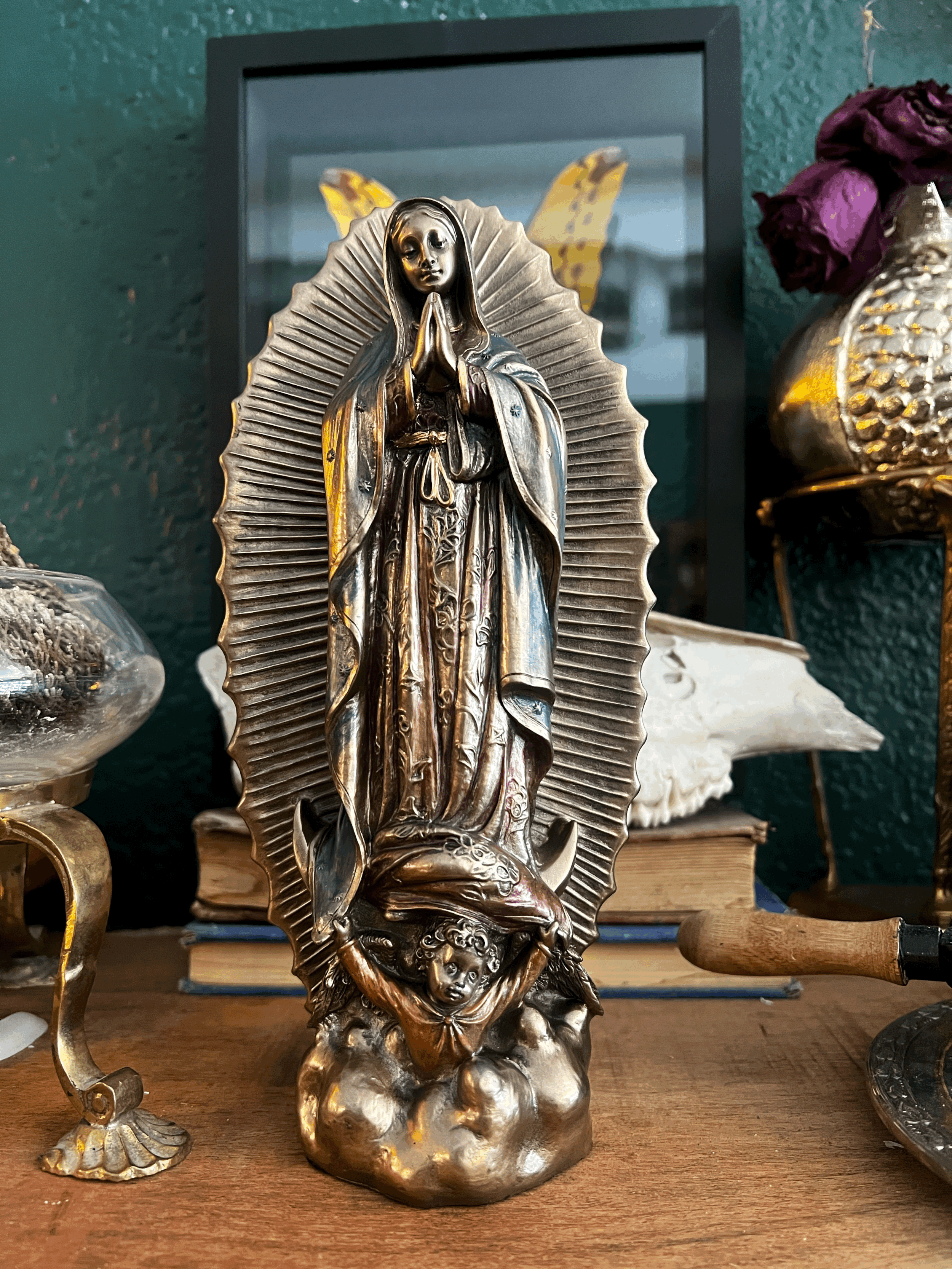 Image 1 of 1